
Archives
Categories

This week we chant and study the double portions of Matot (“Tribes”) and Mas’ei (“Journeys”) that conclude Sefer B’midbar, the Book of Numbers, the fourth of the five Books of Moses.
Matot focuses on vows and oaths, a battle against the Midianites, and the request of the tribes of Rueben and Gad to remain on the far eastern side of the Jordan where they can pasture their flocks.
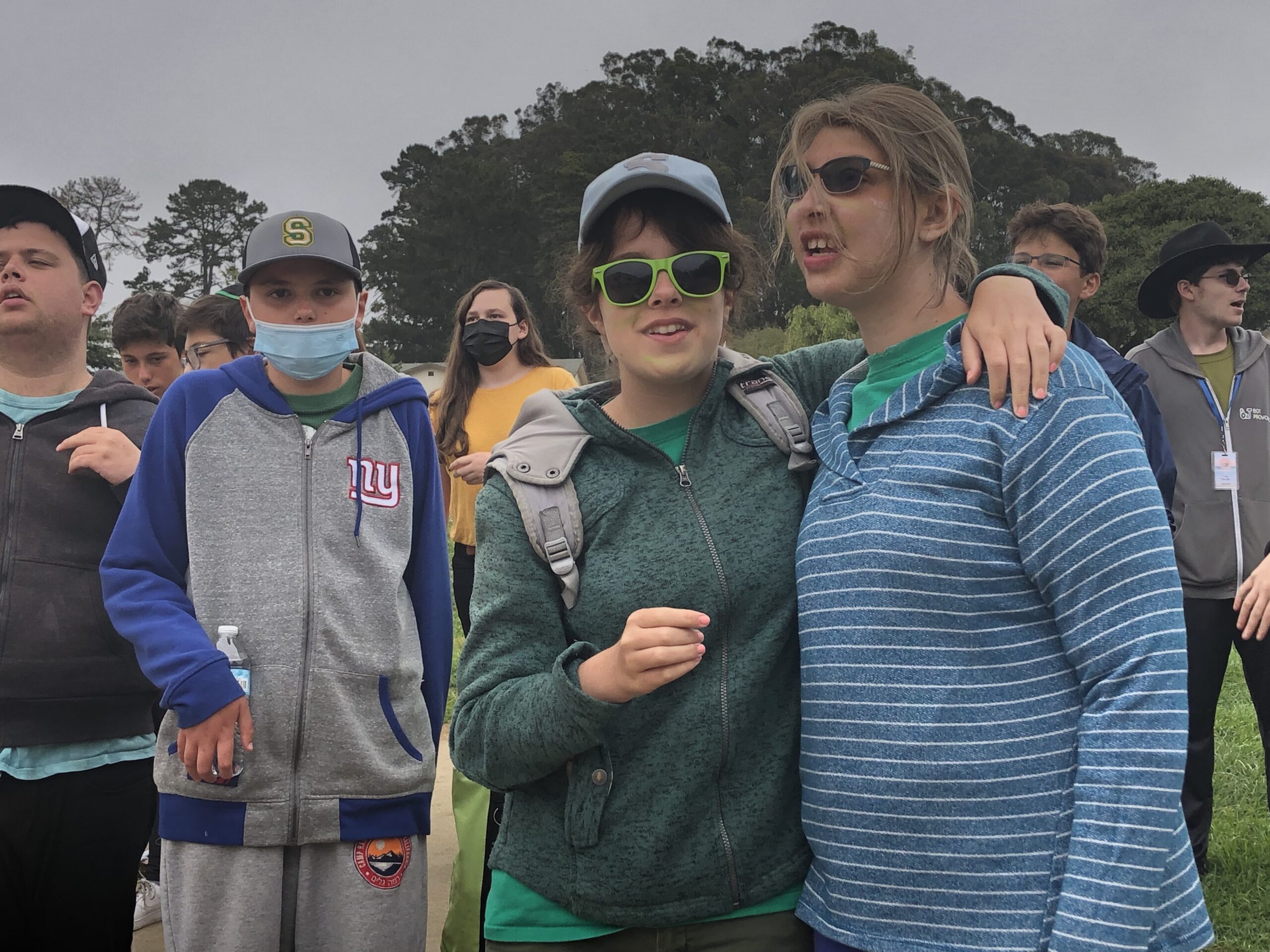
When the idea of including campers with disabilities in Ramah camp was proposed in the late 1960s, there was a great deal of pushback. Fortunately, we have come a long way since the first Ramah camp began including people with disabilities through its Tikvah Program in 1970. Following in this Ramah tradition, Ramah Galim was founded with inclusion as a core value with Tikvah as part of our camp from the beginning — and we get more inclusive each summer.
There is a peculiar verse toward the beginning of this week’s Torah portion, Pinhas. The portion begins with the aftermath of the zealous act of Pinhas, Aaron’s grandson, who violently intervenes to stop the people’s idolatrous apostasy at Baal Pe’or, ending the accompanying plague. Pinhas is granted a covenant of peace in response to his actions, and the people are commanded to “assail the Midianites” in retaliation.
We then get our curious half verse: “When the plague was over…God said to Moses and to Eleazar son of Aaron the priest, “Take a census of the whole Israelite community” (Numbers 25:19-26:2). The ellipsis here represents that the verse abruptly ends there; there is even a paragraph break in the text of the Torah before resuming with the new topic of the census of the people.
Critical Bible scholars suggest that perhaps this is an indication that the census and what follows was inserted here into the Torah, which would have otherwise continued with the story of the war with Midian, which we finally do read in chapter 31.
But this year, and after my wonderful time at Ramah Galim last week, I am more interested in the spiritual implications of the Torah inserting a pause “when the plague was over.” Perhaps the Torah is telling us that after experiencing the disruption, devastation, and loss of a plague (something that once happened every decade and not every century), we cannot simply move on. We need time to take stock, to reflect on lessons learned, before we simply move on to the next thing.
As I immersed myself for the first time in the Ramah Galim community last week, this is precisely what I saw. On that first morning, I led tefilot (prayers) for Solelim (the rising 6th and 7th graders) and I asked the chanichim (campers) to share something they were grateful for as we sang Modeh Ani. One offered: “I’m grateful to be at camp.”

In Parashat Behar, we read about the Shemita (Sabbatical) and Yovel (Jubilee) years that Israelite farmers and landowners were commanded to observe. Every seventh year, crops could not be planted and the land was allowed to rest. Every 50th year, land was returned to its original owner. Some rabbinic sages have taught that the purpose of the Shemita was to demonstrate to people that the earth belongs to God and is only entrusted to human beings. Rabbi Abraham Isaac Kook, the Chief Rabbi of Israel before 1948, taught that the purpose of the Jubilee Year was to bring about unity among people by restoring self-respect among the poor and closing the gap between the rich and the poor.